You can play pickleball in light rain if the court has no standing water, surface feels grippy, and lines aren’t slick. Test the surface with the touch test, shoes should not slide. Use microfiber towels to dry wet spots and grip. Switch to high-visibility balls in overcast conditions.
Stop immediately if surfaces feel slick, you slip, or heavy rain starts. Adjust movement by taking shorter steps and keeping weight centered. Prioritize placement over power. To learn more about wet court safety and strategy, continue with additional guidance.
Can You Play Pickleball in the Rain?
Can You Play Pickleball in the Rain?
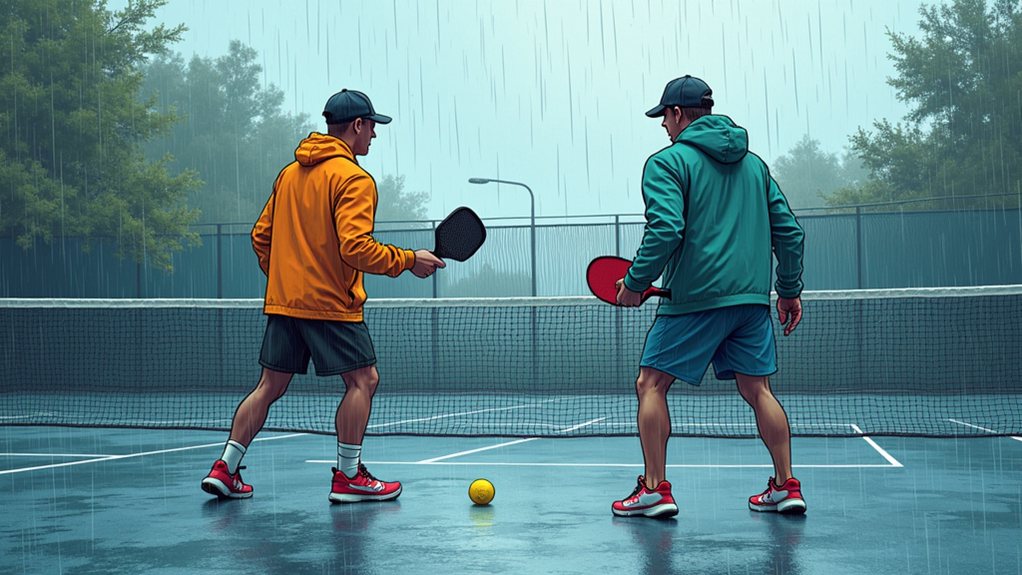
Yes, you can play pickleball in the rain, but it depends on conditions. Light rain or mist is sometimes playable if the court retains good grip and no pooling exists. Heavy rain, standing water, or surfaces that feel slick to the touch prohibit all play immediately.
Check these factors before playing:
- Look for standing water. Solid pools or flooded courts create unsafe conditions.
- Test surface traction. Textured concrete performs better than standard acrylic when wet.
- Assess visibility. Use high-visibility balls when rain reduces visibility.
- Check your experience level. Experienced players with caution may play in drizzle, but novices should avoid wet conditions entirely.
If rain intensifies or footing feels unsafe, stop play immediately regardless of skill level. This caution is especially critical given that falls account for 90.5% of all pickleball injuries, making slippery conditions a serious risk for players of any level.
Why Wet Courts Are Dangerous
Because wet court surfaces become extremely slick, they substantially increase your risk of falls and sprains. Acrylic finishes on outdoor courts lose their traction when wet, making slips and falls easy to occur.
Wet outdoor court surfaces become extremely slick, substantially increasing fall and sprain risk, as acrylic finishes lose traction when wet.
Court lines are particularly dangerous when wet, often becoming the most slippery area on the surface.
Solid pools of water or flooded courts create unsafe conditions that you must never play on. Moving with controlled footwork and shortened steps helps you prevent injury on damp surfaces.
We recommend you stay aware of these specific dangers:
- Standing water causes you to lose your footing instantly
- Wet court lines reduce grip and increase your fall risk
- Wet surfaces force you to change your movement patterns dramatically
- Moisture affects your equipment and changes how the ball bounces
How to Test If Your Court Is Safe
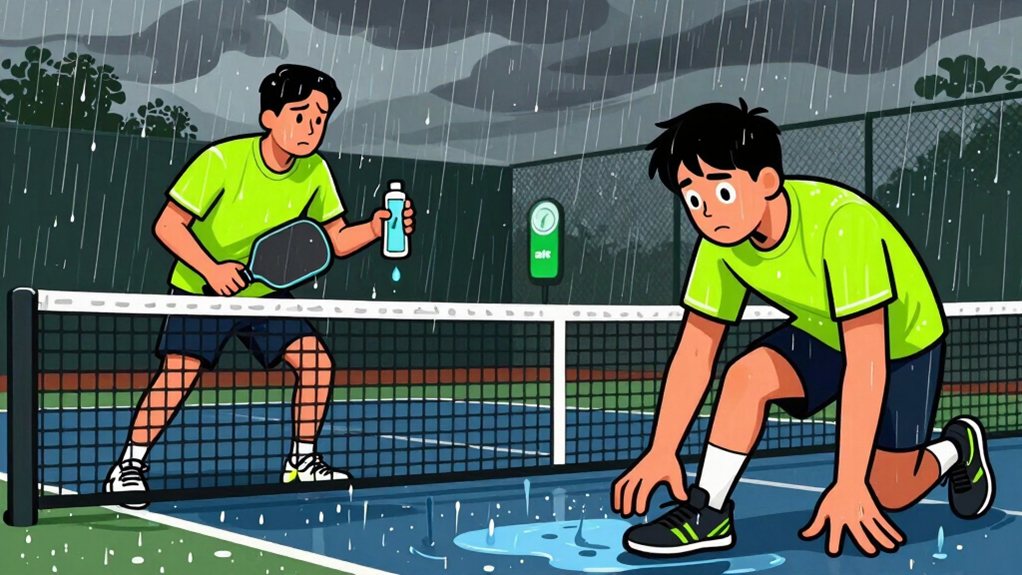
Before you play, test your court using a simple visual check called the “eye test.” Stand at one end and look at the entire surface.
Here’s what to look for:
- One solid, dark wet color means the court is unsafe. Don’t play.
- A mix of dry and wet spots means caution is needed.
- Check for standing water or puddles. These are never safe.
- Look at the court lines. They become the most slippery area when wet.
Next, do the touch test:
- Lightly press your court shoe sole on the surface.
- If it feels slick or tacky, the grip is lost.
- If it feels dry and textured, traction remains.
Finally, check for debris. Wet leaves, nuts, and twigs create extra slip hazards. Clear them before playing.
Weather Conditions That Allow (and Block) Play
Certain weather conditions let’s play safely, while others demand we stay off the court. Light mist and drizzle may allow play if your court has good drainage and no standing water. You must stop immediately when heavy rain arrives or when surfaces feel slick underfoot.
Consider these four weather factors:
- Light rain or mist with no pooling – playable with caution
- Heavy rain or thunderstorms – stop play immediately
- Overcast skies reducing visibility – use high-visibility balls
- Wind speeds above 15 mph – affects ball control and safety
Never play if you see standing water or flooded areas. Test the surface before each point. If your shoes slip, end the session. Your safety matters more than any game.
Must-Have Gear for Playing in the Rain
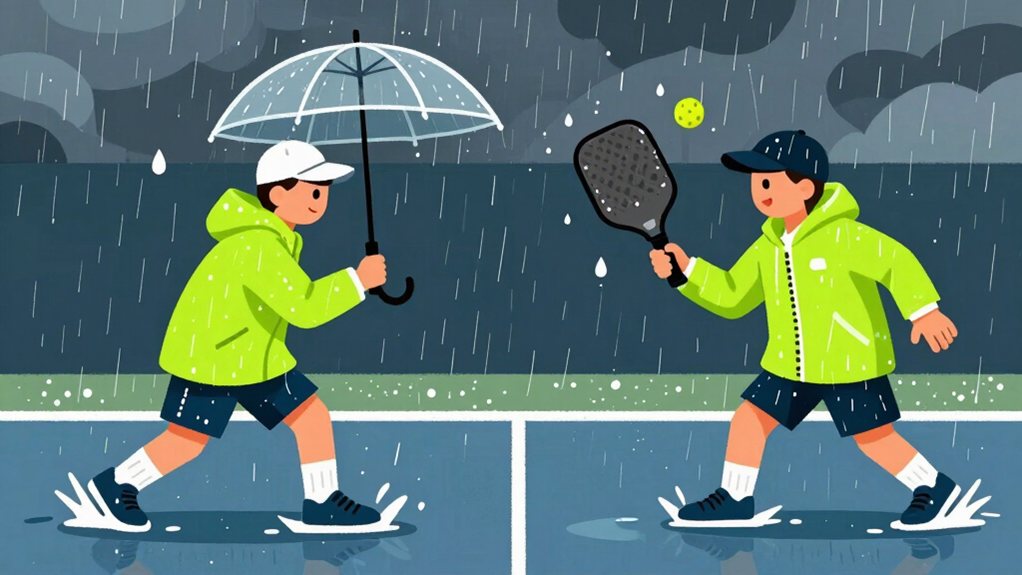
You need the right gear to play safely in wet conditions. Grippy non-marking court shoes give you traction on slick surfaces, and some players keep older pairs for damp weather.
Microfiber towels let you spot-dry slick areas and wipe your hands between points so you maintain control.
Court Shoes
The right court shoes are your most important piece of gear for wet weather play. You need shoes with excellent traction and grip to prevent slipping on damp surfaces. Look for non-marking soles designed specifically for court sports.
Replace your shoes when the tread wears down, as worn soles lose their grip. Keep a dedicated pair for wet conditions to preserve your everyday shoes.
- Look for shoes with gum rubber or soft compound outsoles designed for wet traction
- Check that the sole pattern has deep channels that channel water away
- Make sure the shoes fit snugly to prevent your foot from sliding inside the shoe
- Consider shoes with quick-dry mesh uppers that don’t retain moisture
Microfiber Towels
Once you have proper shoes, microtowels become your second line of defense against wet conditions. Carry at least two microfiber towels. Use one towel to dry slick court spots between points. Use the second towel to wipe your hands and paddle grip.
Microfiber absorbs water quickly and leaves no residue. Pat the court surface dry rather than rubbing. Wipe your paddle face after each wet ball contact. Keep a dry towel in your bag for the drive home.
Replace towels when they become saturated. MagicFiber cloths work well for paddle and grip drying. Rotate between two towels during long matches. Always ring out excess water before wiping surfaces.
Store wet towels separately from dry gear. Multiple towels prevent carrying a soggy load.
Protecting Your Equipment From Water Damage
Your equipment takes a beating when you play in the rain, so protecting it requires quick action and smart storage. Keep your paddles dry by using covers between points, store balls in sealed bags to prevent moisture absorption, and protect grip tape by switching to quick-dry overwraps when they get saturated.
Wipe paddle faces and rotate towels between games to prevent water damage.
Keep Paddles Dry
Protecting your paddle from water damage preserves its performance and extends its lifespan. Moisture warps paddle faces and weakens core material over time. You must keep your paddle dry during wet weather play.
- Wipe the paddle face after every point with a microfiber cloth.
- Store paddles in a waterproof cover or plastic bag between games.
- Avoid laying paddles directly on wet court surfaces.
- Rotate to a dry paddle if your current one becomes saturated.
Check your grip tape regularly. Wet grip tape loses tackiness and requires replacement. Keep extra grip tape in your bag for emergencies.
Store Balls Properly
Keeping pickleballs dry preserves their performance. Wet balls absorb water, become heavier, and lose their true bounce.
- Store your balls in sealed plastic bags when not in use.
- Keep extra dry balls in your bag at all times.
- Never leave balls on wet court surfaces.
- Before your session, inspect each ball for moisture.
- Rotate dry balls into play every few games.
- Replace balls that feel soft or spongy after water exposure.
- Avoid hitting balls on wet ground; splashing grit damages ball surfaces.
- After playing, dry balls completely before storing them long-term.
- Check ball seams for signs of water damage or delamination.
Protect Grip Tape
Water damages more than just your balls. Your grip tape absorbs moisture quickly, turning a reliable paddle into a slippery hazard. Wet grip tape causes the paddle to twist in your hand at the worst moments.
- Apply a water-resistant grip spray before you play in damp conditions.
- Keep a dry overgrip in your bag and replace the wet one immediately between games.
- Use a quick-dry towel to pat your grip dry every few points.
- Store spare grips in a sealed plastic bag to keep them dry until needed.
Your equipment performs better when you protect it from water. Make grip protection part of your rainy day routine.
Court Movement Tips for Wet Conditions
When the court is damp, you must change how you move to stay safe. Wet surfaces dramatically increase your fall risk.
- Take shorter steps. Your normal stride becomes dangerous on slick acrylic.
- Reduce your speed. Full-speed sprints lead to slips and injuries.
- Keep your weight centered. Lean forward slightly to maintain balance.
- Avoid sudden direction changes. Plant your feet before moving sideways.
- Stay low during shifts. Bend your knees more than usual.
- Limit your reach. Stretching for shots increases your fall risk.
- Stop immediately if you feel unstable. Your safety matters more than any point.
Practice these adjustments during light rain before playing in heavier conditions.
We recommend mastering these techniques through drills before competitive play in damp weather.
Strategy Shift: Placement Over Power
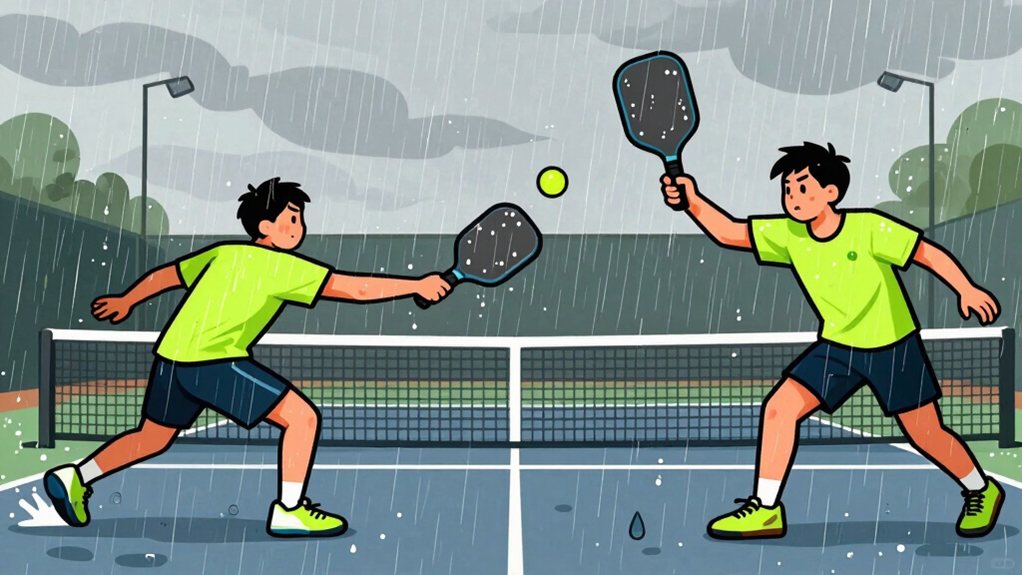
When playing in the rain, you must prioritize placement over power.
You should avoid aggressive shots that rely on speed: dinks, drops, and lobs work better instead.
Stay low, move less, and control the point with precision on slick surfaces.
Prioritize Placement
Because wet courts limit your mobility, you must shift from power plays to placement strategies. Place your shots in open spaces where your opponent can’t reach them. Focus on dinks and drops that land softly in the kitchen.
Aim for the corners of the court to force movement. Keep your shots low over the net to prevent easy returns. Change your shot direction frequently to keep opponents guessing.
- Target the sidelines instead of hitting toward the center
- Drop the ball into the non-volley zone for safe, controlled play
- Hit to your opponent’s weaker side consistently
- Use angle shots to push opponents out of position
Placement over power keeps you safe and in control during wet play. You reduce the risk of slipping while maintaining competitive pressure. This works well.
Avoid Power Shots
Building on placement tactics, you must eliminate power shots from your game. Wet courts punish aggressive swings. Your momentum carries you into slips when you hit hard. Control your shots.
Focus on dinks and drops instead. Keep your paddle compact. Shorten your follow-through. Stay low and balanced.
Shot Type | Wet Court | Dry Court
———-|———–|———-
Power Hit | Avoid | Use
Dink | Safe | Safe
Lob | Use with Caution | Safe
Drop Shot | Preferred | Safe
- Use compact swings only.
- Target open court spaces.
- Vary your spin selection.
- Reset points frequently.
- Wait for high-percentage balls.
- Move opponents side to side.
- Keep your feet stationary.
Signs You Need to Stop Playing Immediately
If any of these warning signs appear, stop playing immediately and clear the court:
- Standing water covers any part of the court surface. Never play through puddles. Water creates the most dangerous condition for falls and serious injuries.
- You slip or lose your balance even once during play. One slip means the surface has become unsafe. Don’t ignore this warning sign or continue playing.
- The ball bounces inconsistently because it has absorbed moisture. Wet balls feel heavy and sluggish. They don’t bounce true or travel at normal speeds.
- You can’t maintain a firm grip on your paddle due to wet hands. Wet grip tape loses all traction and control. Replace wet grip tape immediately or stop playing entirely.
The Bottom Line: Is Playing in the Rain Worth It?
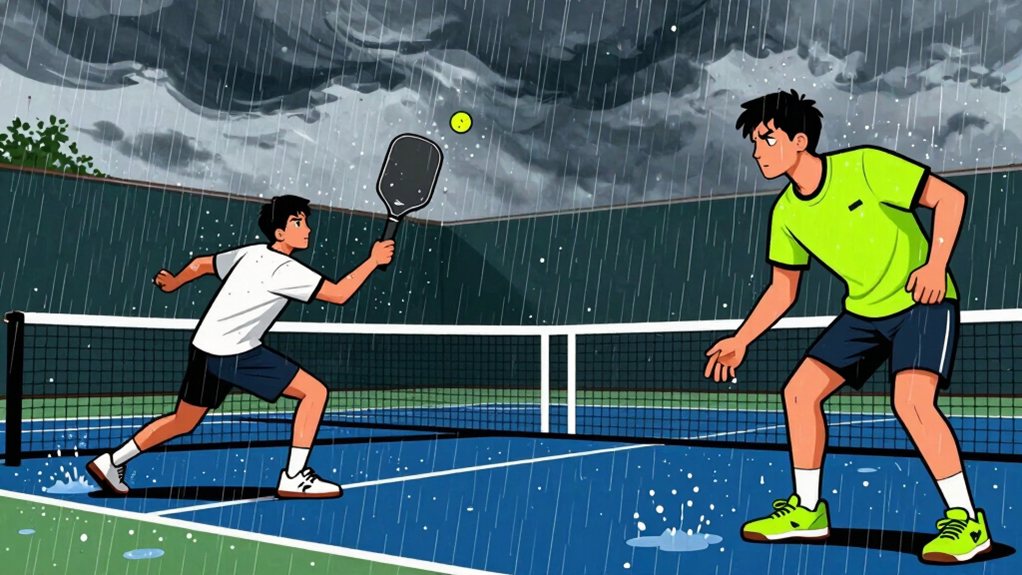
When considering whether to play in the rain, safety must always come first. Wet surfaces cause falls. You risk injury. Review these factors before stepping onto a wet court:
| Condition | Decision |
|---|---|
| Light mist, no pooling | Play with caution |
| Heavy rain or standing water | Do not play |
| Court feels slick underfoot | Stop immediately |
Test the surface before you play. Place your foot down gently. Does it slide? If yes, stay off. Can you see water puddles? If yes, do not play.
Light drizzle with good drainage may allow play. You must move carefully. Shorten your steps. Skip diving shots. Focus on placement over power.
Your equipment suffers in rain too. Balls get heavy. Grips get slippery. You compromise your game and your safety.
The bottom line: most players should skip wet court play. Wait for dry conditions. Your body and your equipment will thank you.
Frequently Asked Questions
Is It Safe to Play Pickleball During a Thunderstorm?
No, you must stop playing immediately when thunderstorms approach. Lightning poses fatal risks, and heavy rain makes courts dangerous. Seek shelter until storms pass, then wait 30 minutes after the last thunder before returning to play.
Can Cold Rain Cause Hypothermia While Playing?
Hypothermia can onset in just 30 minutes when body temperatures drop. You risk dangerous core cooling in cold rain. Stop playing immediately if you shiver uncontrollably, feel confused, or notice blue lips, these are warning signs. Seek warmth instantly.
Do Indoor Courts Become Slippery When Wet?
Yes, indoor courts become slippery when wet. Water creates a thin film between your shoes and the floor, drastically reducing traction. You should wait until the surface is completely dry to avoid dangerous slips entirely.
Are There League Rules That Ban Play in Rain?
Many leagues ban play during rain, especially when courts become slick or pooling occurs. You must check your specific league’s weather policy, as most suspend play immediately when heavy rainfall creates wet surface conditions.
Should I Use a Waterproof Bag for My Paddle?
Yes, you should use a waterproof bag for your paddle. Studies show that water exposure causes paddles to warp and lose up to 40% of their original playing characteristics.
Keep your paddle dry, wipe it frequently, and store it in a sealed bag to protect your equipment.
Final Thoughts
Weigh the risks before you play. You accept danger when you step onto wet courts. Slippery surfaces cause falls. Balls bounce inconsistently. Paddles lose grip. If you choose to play, you assume responsibility for injury. Check conditions first. Stay cautious. Move carefully. Stop immediately if you feel unsafe. The choice is yours.